

Disability Inclusion Is an Economic Strategy. Are African Markets Ready?
Across Africa, persons with disabilities are professionals, entrepreneurs, creatives, innovators and business owners. They have ideas to develop, businesses to build, careers to pursue and contributions to make. Yet participation is often limited by systems that were not designed with their needs in mind.
November 12, 2026 by AbilityX Team / 5 min read
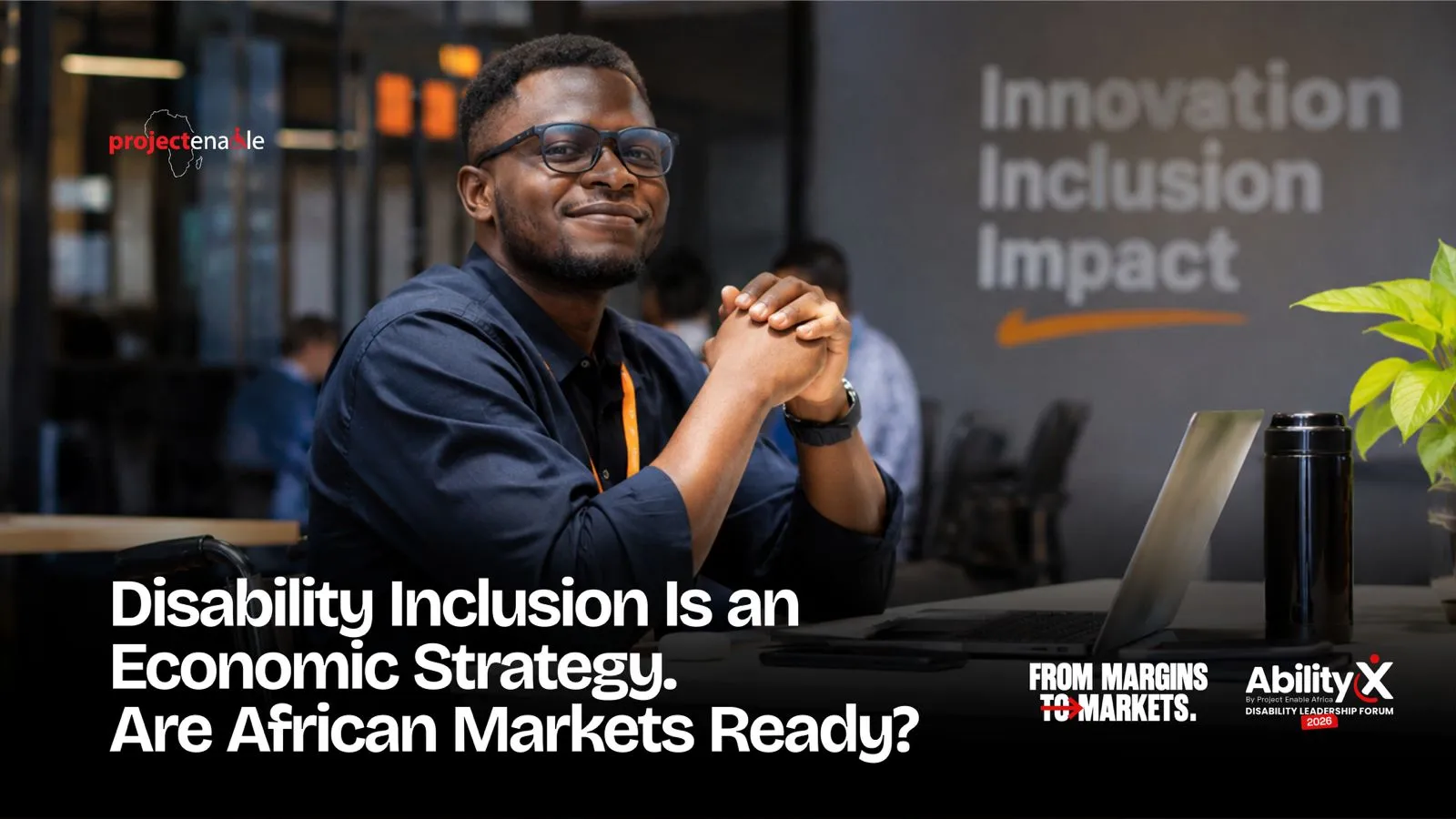
For too long, disability inclusion has largely been discussed as a question of access, representation and social responsibility.
These conversations remain important. Accessible infrastructure, inclusive policies and equal participation are essential. But there is another dimension we need to take more seriously: the economic value of including persons with disabilities in our markets, workplaces and business ecosystems.
Disability inclusion is not only about doing what is right. It is also about recognising the talent, ideas, skills and entrepreneurial potential that economies stand to benefit from when barriers are removed.
The opportunity we are overlooking
Across Africa, persons with disabilities are professionals, entrepreneurs, creatives, innovators and business owners. They have ideas to develop, businesses to build, careers to pursue and contributions to make.
Yet participation is often limited by systems that were not designed with their needs in mind.
A qualified candidate may encounter an inaccessible recruitment process. An entrepreneur with a viable business may struggle to access finance, business development support or market opportunities. A skilled professional may be employed but unable to perform effectively because workplace technology and infrastructure are inaccessible.
These barriers do more than limit individual opportunities. They also restrict economic participation.
When people cannot access jobs, capital, technology or markets because of avoidable barriers, businesses miss out on talent, innovation and potential customers.
The question, therefore, should not simply be whether organisations are willing to include persons with disabilities. It should be whether their systems, products, services and opportunities make meaningful participation possible.
Inclusion must move beyond intention
Building a disability-inclusive economy requires deliberate action across several areas.
Employment: Organisations must examine their recruitment processes, workplace environments, technology and policies to ensure qualified persons with disabilities can access jobs, contribute and advance professionally.
Entrepreneurship: Entrepreneurs with disabilities need access to business development opportunities, mentorship, finance, networks and markets. Inclusion must extend beyond encouraging people to start businesses to creating conditions in which those businesses can grow.
Finance: Financial institutions must consider whether their products, services and delivery channels are accessible to persons with different disabilities.
Technology: Innovation must account for accessibility from the design stage. Assistive technology and accessible digital solutions can expand independence, productivity and participation.
Policy: Commitments to disability inclusion must translate into practical systems, measurable action and opportunities that people can experience.
These are interconnected issues. Progress in one area can create opportunities in another, but lasting change requires businesses, policymakers, innovators, development organisations and persons with disabilities to work together.
From being included to participating in the economy
There is an important difference between giving someone access to a space and creating the conditions for them to participate meaningfully.
A person may be invited into a workplace but lack the accommodation needed to do their job. An entrepreneur may be encouraged to build a business but remain excluded from financing and procurement opportunities. A digital platform may claim to serve everyone while remaining inaccessible to some users.
This is why the next phase of disability inclusion must ask a more practical question:
What becomes possible when persons with disabilities can fully participate?
Can they build sustainable businesses? Access decent employment? Obtain financing? Develop innovations? Compete for contracts? Lead organisations? Create wealth?
These are the outcomes that should increasingly shape our conversations about inclusion.
Taking the conversation to AbilityX 2026
This thinking is at the centre of AbilityX 2026, Project Enable Africa's Disability Leadership Forum.
Under the theme “From Margins to Markets: Africa's Blueprint for Disability-Inclusive Growth,” AbilityX will bring together persons with disabilities, business leaders, employers, policymakers, innovators, development partners and changemakers to examine what it will take to expand economic participation.
The forum will also feature two practical masterclasses:
- Inclusive Employment, hosted by Jobberman.
- Assistive Technology Innovation
These sessions will contribute to the wider conversation about creating accessible workplaces, developing inclusive solutions and expanding opportunities for persons with disabilities.
The goal is not simply to have another conversation about disability inclusion. It is to bring different stakeholders together to examine the barriers, identify opportunities and strengthen the partnerships needed to move forward.
The market cannot afford to leave people behind
A truly inclusive economy is one in which people can contribute their skills, develop their ideas, access opportunities and participate in creating value.
Persons with disabilities should not have to fight against inaccessible systems just to participate in everyday economic activities.
Inclusion must be reflected in how we hire, finance, design, innovate, build businesses and create opportunities.
The future of disability inclusion must be about more than access. It must be about participation, productivity and opportunity.
From Margins to Markets is not just a theme. It is a call to rethink who participates in our economies and what becomes possible when barriers are removed.
Be part of the conversation at AbilityX 2026
Date: Thursday, November 26, 2026 Time: 9:00 AM Venue: Paradise Event Arena, Alagomeji Bus Stop, Yaba, Lagos
Attendance is free, but registration is compulsory.
Register: https://bit.ly/AbilityX2026
AbilityX 2026 is organised by Project Enable Africa in partnnership with Jobberman